Case study I
Montajes y Procesos
Montajes y Procesos inspects and certifies elevators, escalators, electric doors, lifting platforms and stair lifts across Colombia under the NTC 5926 standards, accredited by ONAC for ten years. Their operation ran on spreadsheets and paper. I built the web platform and Android app that now run it, from scheduling inspectors to issuing certificates.
- Client
- Montajes y Procesos MP S.A.S.
- Role
- Sole developer, from architecture to launch
- Year
- 2026
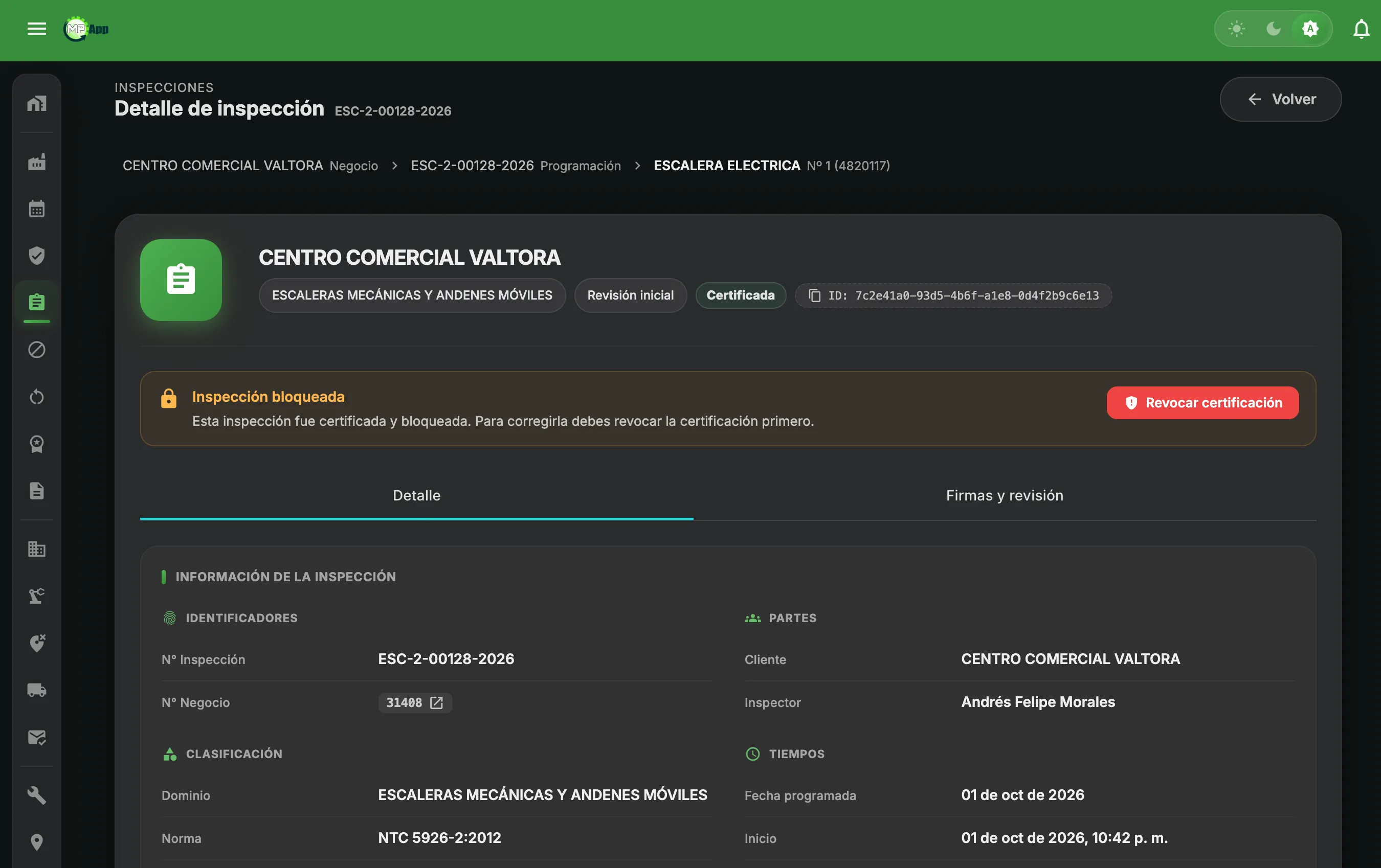
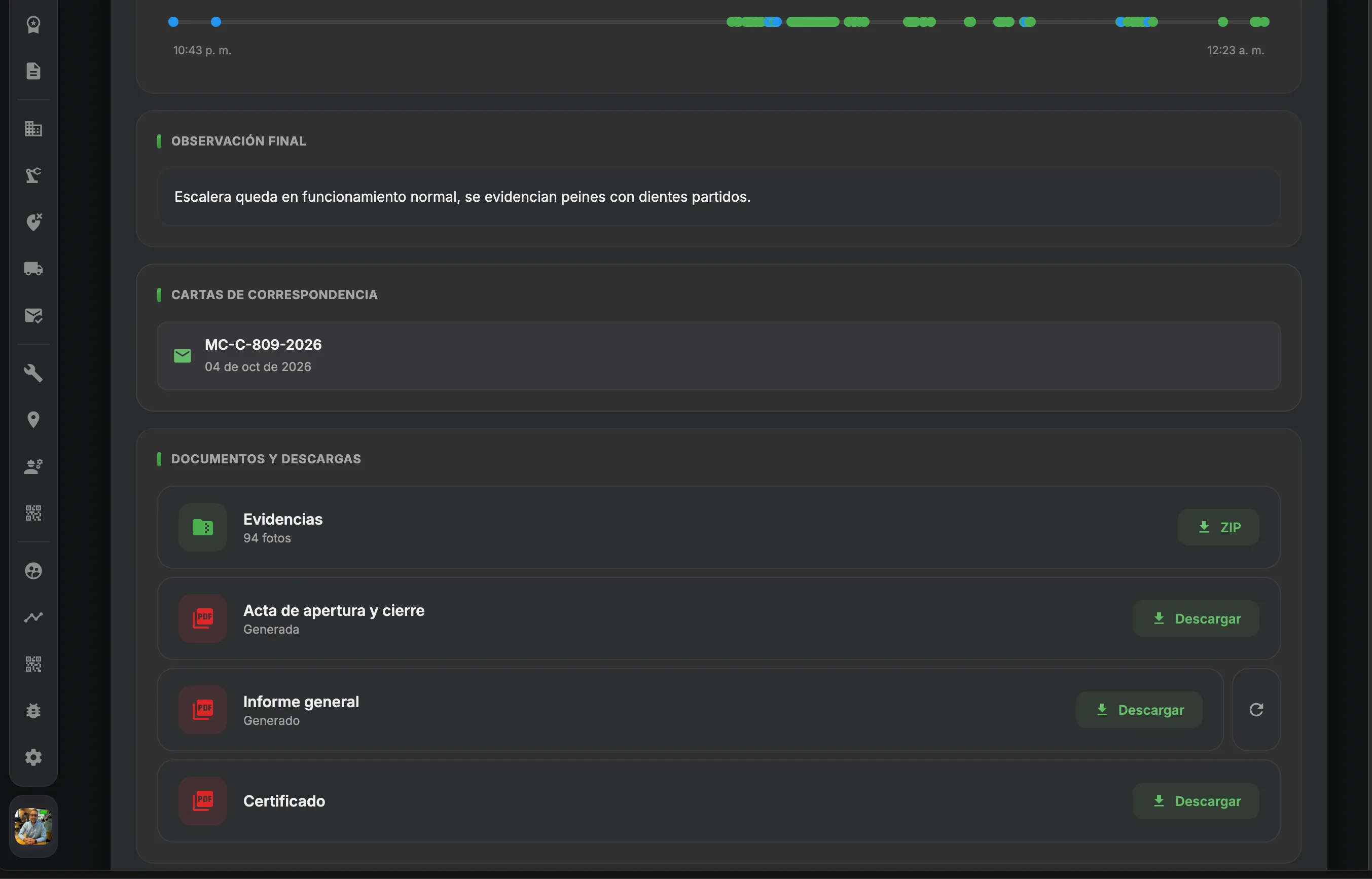
Once an inspection is reviewed and attested, the certificate can reach the client in as little as five minutes instead of three days, for about 500 pieces of equipment a month. It also replaced more than ten out-of-date spreadsheets.
The problem
Montajes y Procesos has been accredited by ONAC, Colombia’s national accreditation body, for ten years. Every piece of equipment they inspect, under each part of the NTC 5926 standard, ends in a certificate. Before this project, getting there took about three days, even when everything went well.
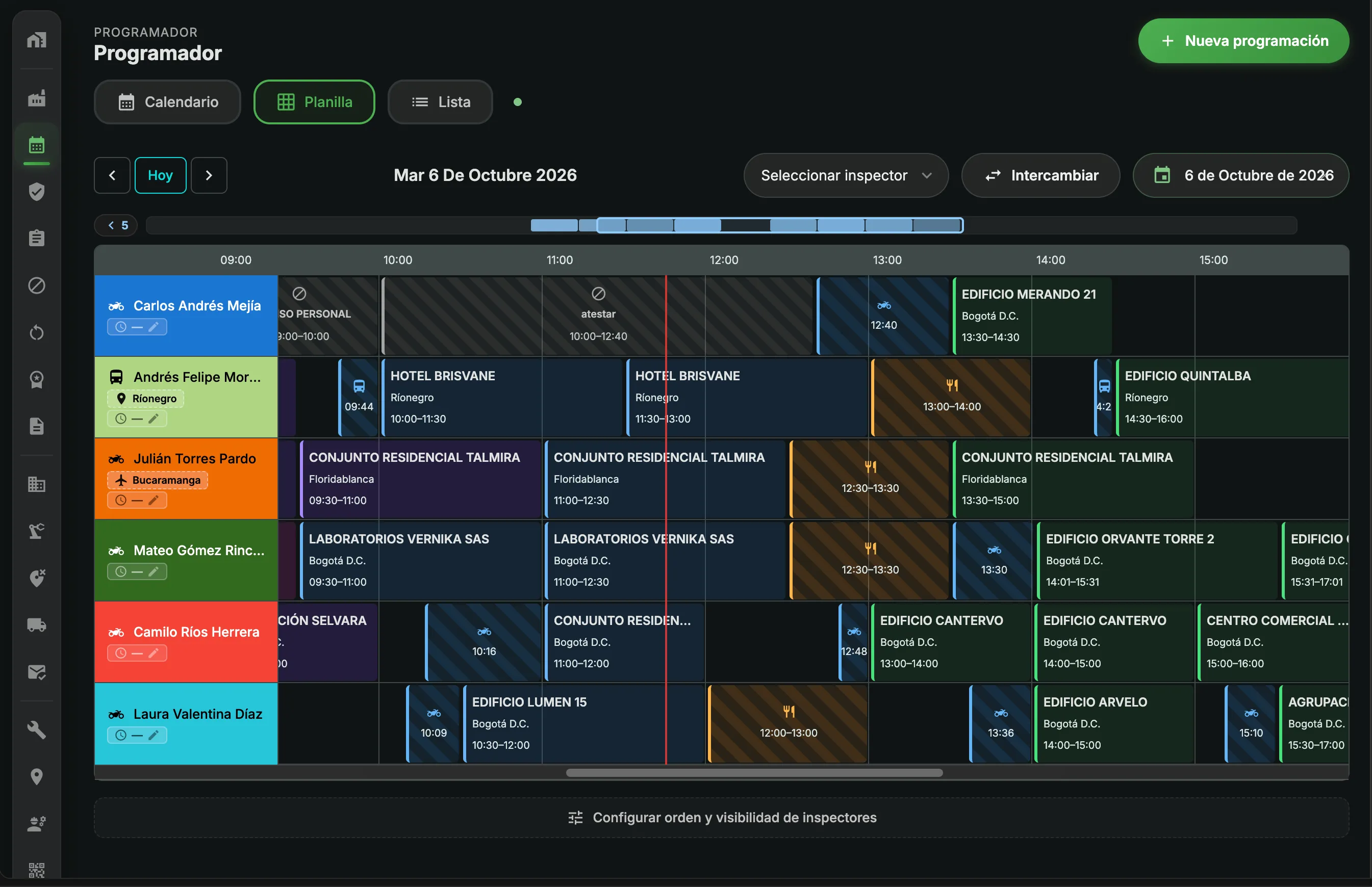
Scheduling lived in spreadsheets, more than ten of them, each one a little out of date. Inspectors were assigned by memory, sometimes across the city from where they were needed. Reports and certificates were written by hand after each visit, and clients had to call to find out where their inspection stood.
The solution
A single system, used by everyone who touches an inspection.
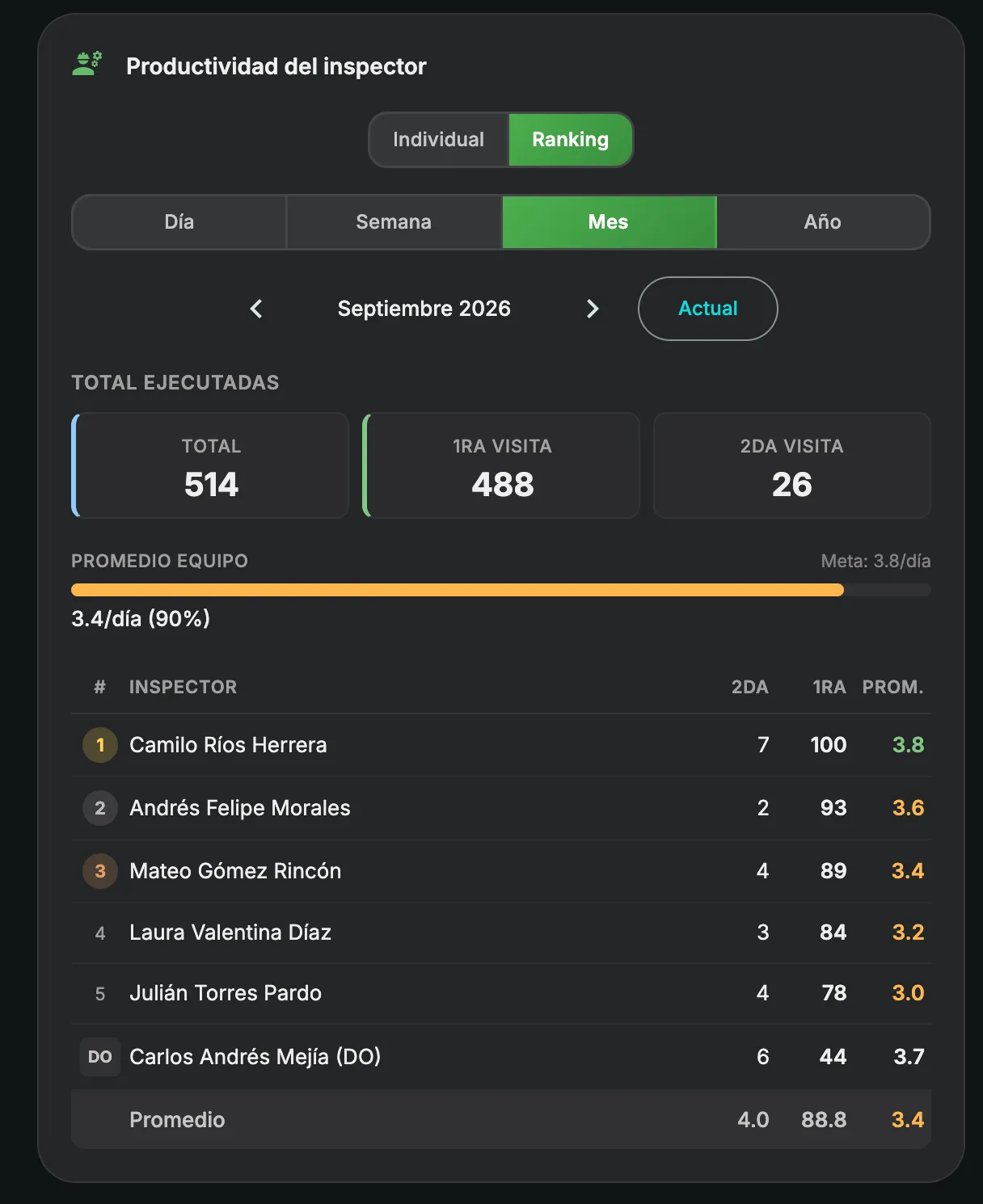
The office works in a web platform where they create inspections, choose the inspector and follow each one through to the certificate. When they schedule a visit, the system suggests the best inspector by weighing distance, workload and availability, so nobody crosses Bogotá for a job someone else could reach in ten minutes. Every address is checked against Google Maps before the process starts, so no inspector is sent to a place that doesn’t exist.
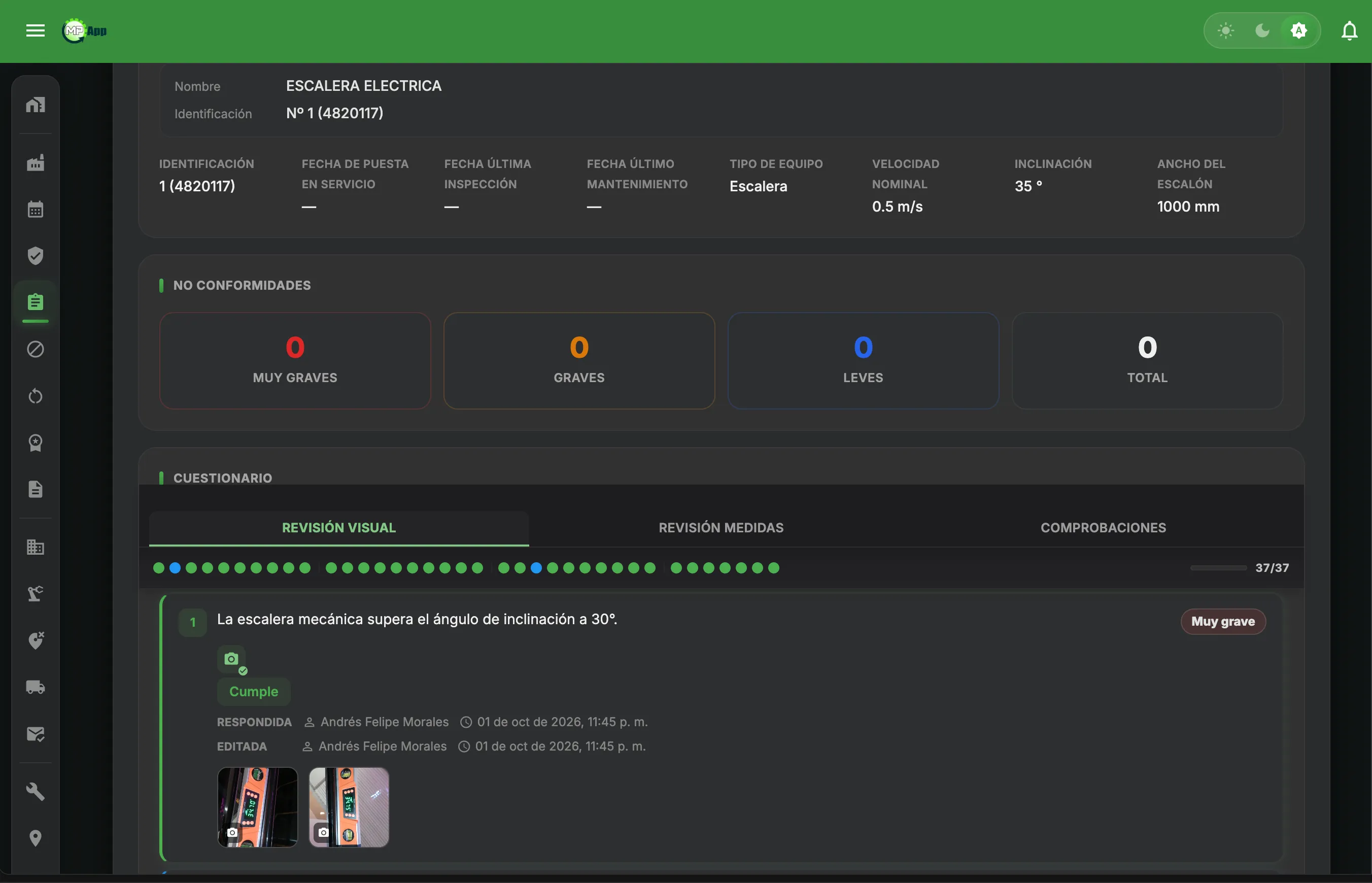
Inspectors carry an Android app. They see their day, record the inspection on site and send it back without paperwork. The report and the certificate are generated from that data and go through the company’s review and attestation process. Every certificate carries a QR code that opens it, as the certification rules require.
Clients and staff are notified by email and in the app at every step, so nobody has to call to ask.
The outcome
- Once attested, a certificate can reach the client in as little as five minutes, not three days.
- About 500 pieces of equipment a month go through the system.
- More than ten spreadsheets were retired.
- Inspectors are sent to the nearest job, which cuts unnecessary travel.
- Address validation prevents around 20 errors a month.
Technical notes
The web platform is built with Angular 21, using standalone components and signals, organised by feature with repositories over Firestore and role-based access control. The field app is native Android, written in Kotlin with Jetpack Compose. Behind both run 84 Cloud Functions on Firebase, including the inspector ranking, transactional email and certificate generation.